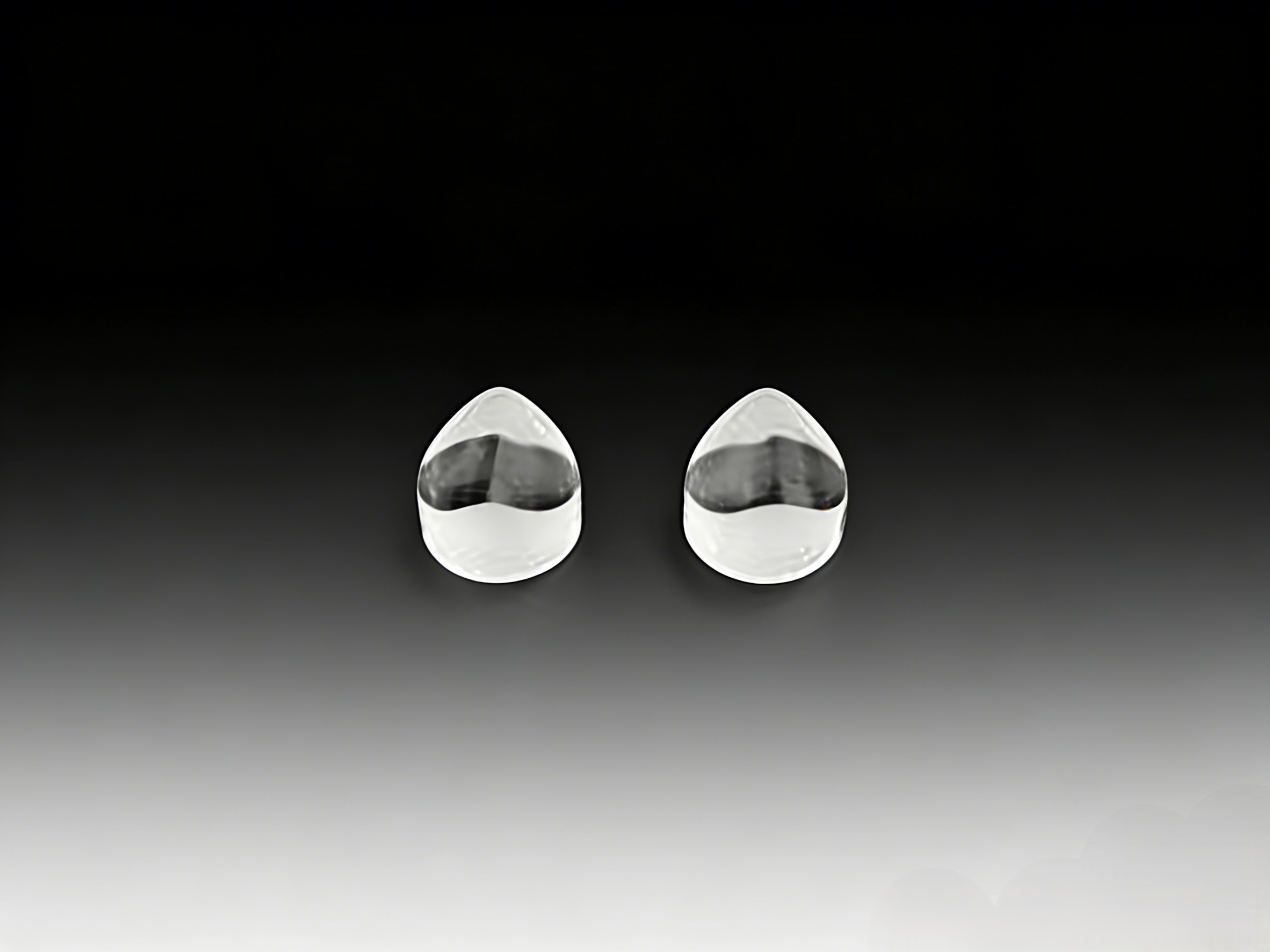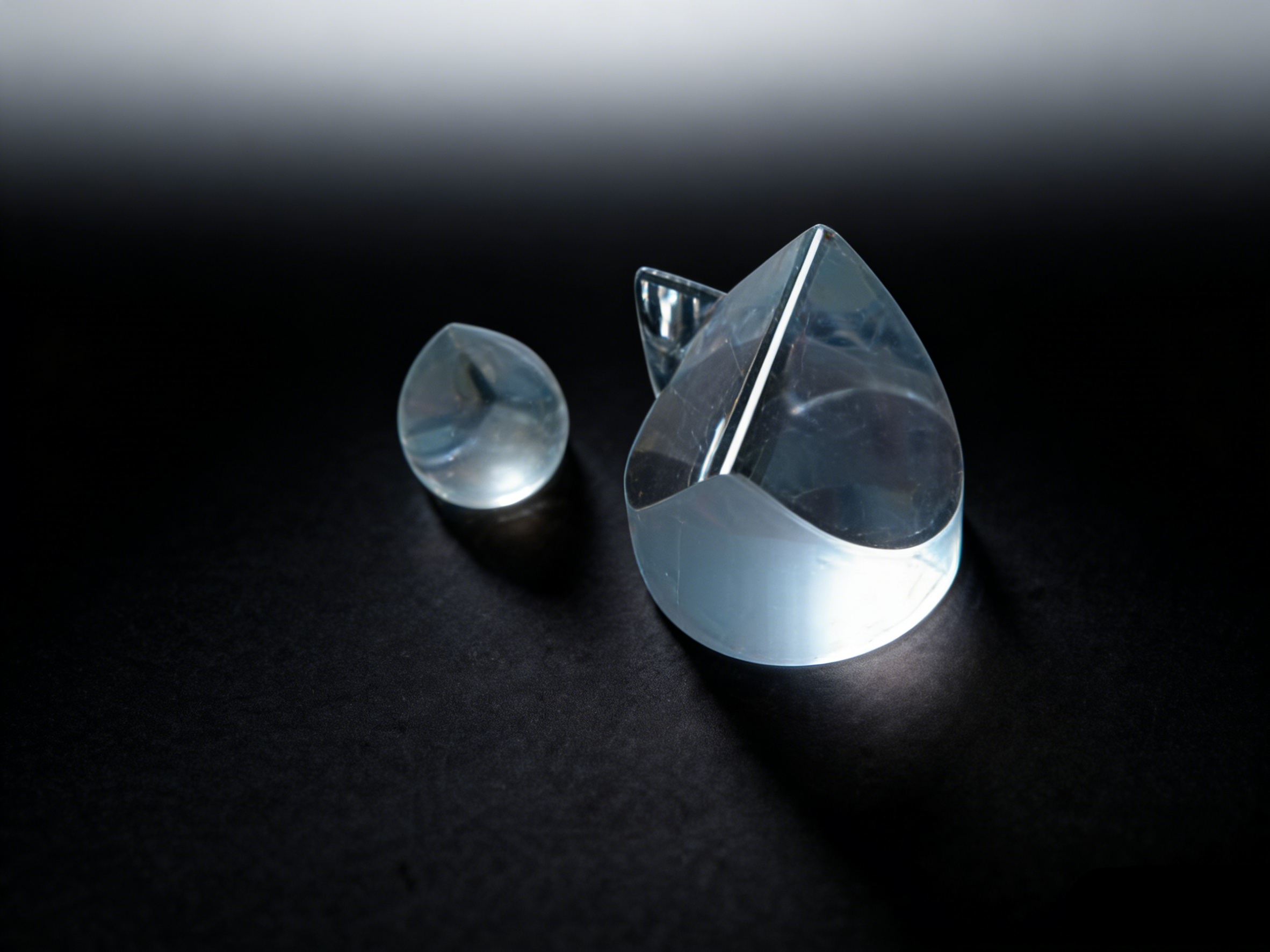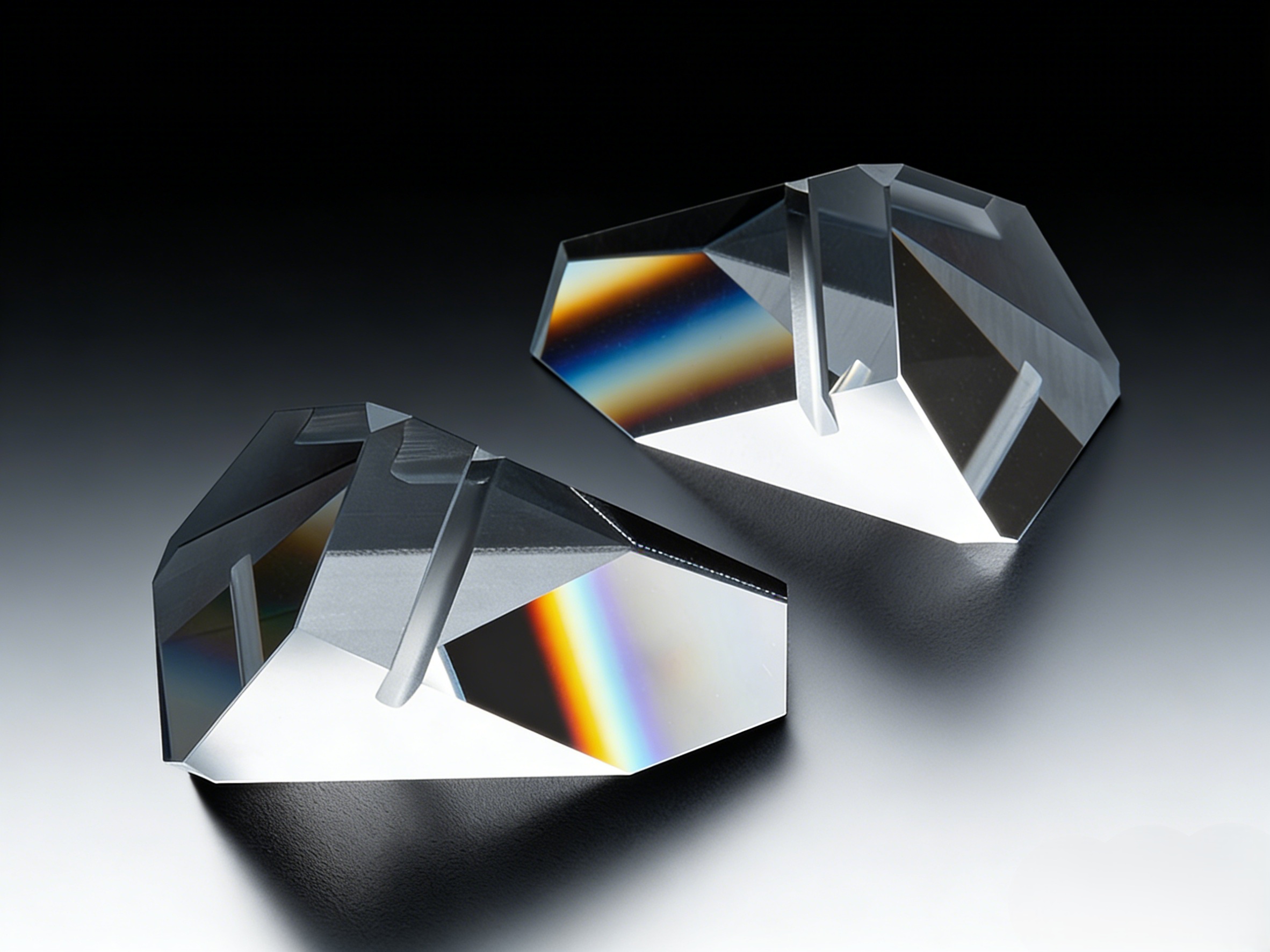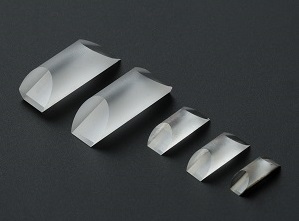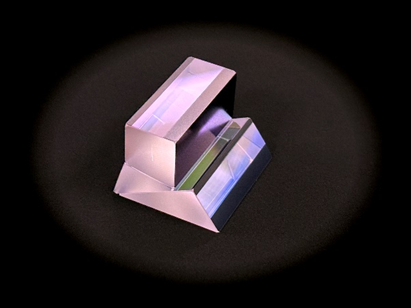
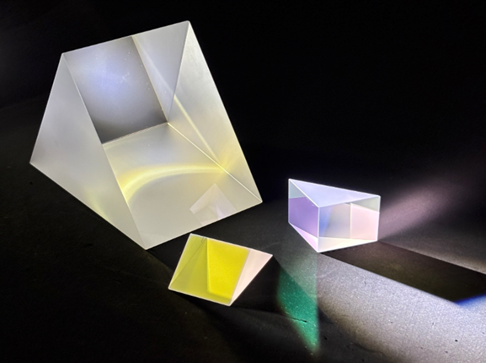
The Dispersion Prism produced by UItraopto Precision Optics Co. Ltd. is used to split white light into the visible spectrum. The dispersion prism is generally used at the minimum deviation angle. Under the condition of the minimum deviation angle, the incident light of a certain wavelength passes through the prism parallel to the base surface, and when measured with respect to the normal of the prism surface of each interface, the incident angle is equal to the refractive angle.
At the minimum deviation angle, since the incident angle is close to the Brewster angle, the maximum light transmittance aperture can be achieved and the reflection loss of P-polarized light can be reduced. For S-polarized light, the surface reflection can be reduced by customizing anti-reflection films.
Size range:
5 - 100 mm
Ideal Light Diffusion Element
Accept various types of customization
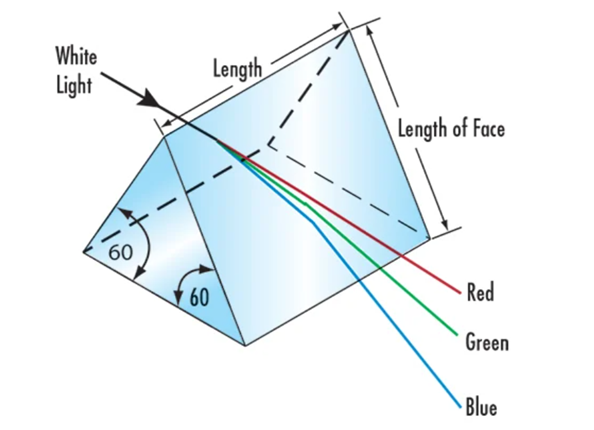
UltraOpto’s optical dispersion prisms are precision-engineered core components designed to split white light into its component visible spectra, delivering reliable spectral separation for spectroscopy, optical analysis, and laser systems. Optimized for operation at the minimum deviation angle, these prisms ensure consistent light path performance, maximum transmittance, and minimal light loss, meeting the stringent requirements of scientific research and industrial manufacturing.
Key Optical Advantages
Precise Spectral Separation:
Reliably split white light into distinct visible spectral components with consistent light path stability
Minimum Deviation Angle Optimization:
Aligns incident angle with Brewster angle to maximize transmittance and reduce P-polarized light reflection loss
Customizable AR Coatings:
Tailored anti-reflection coatings for specific wavelengths to minimize S-polarized light surface reflection
Ultra-High Precision Manufacturing:
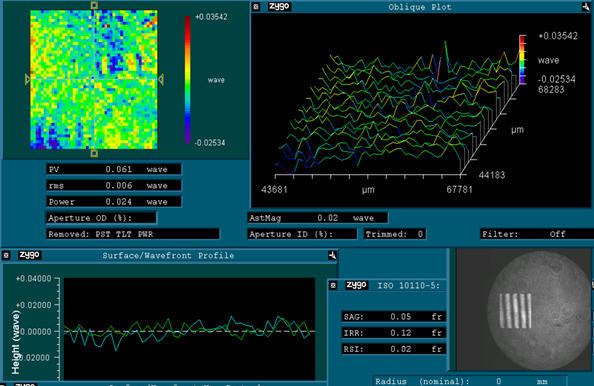
Strict control of polishing processes ensures exceptional angle accuracy and superior surface quality
Flexible Custom Solutions:
Custom apex angles, material options (N-BK7, Fused Silica, etc.) and coating designs to meet unique application requirements
Dispersion prisms operate on the principle of refraction, where different wavelengths of light bend at distinct angles as they pass through the prism material. UltraOpto’s dispersion prisms are calibrated for use at the minimum deviation angle, a critical operating condition where incident light of a target wavelength travels parallel to the prism’s base surface, with equal incident and refraction angles relative to the surface normal at each interface.
At this optimal angle, the incident light aligns closely with the Brewster angle, achieving the maximum light transmittance aperture and significantly reducing reflection loss for P-polarized light. For S-polarized light, our custom anti-reflection (AR) coatings further suppress surface reflection, ensuring uniform, low-loss performance across your application’s wavelength range.
Our spectral separation prisms are engineered for a wide range of high-precision optical applications, including:
Spectroscopy & Spectral Analysis:
Laboratory spectral measurement, chemical analysis, and environmental monitoring systems
Laser Systems:
Laser beam shaping, wavelength separation, and tunable laser setups
Optical Instrumentation:
Biomedical imaging, astronomical telescopes, and industrial inspection equipment
Scientific Research:
University laboratories, R&D centers, and advanced optical experiment platforms
Customization Services
UltraOpto offers fully customized dispersion prism solutions to match your exact application needs. Our engineering team can tailor:
Custom apex angles and dimensional specifications
Wavelength-specific AR or high-reflection coatings
Material selection for UV, visible, or IR spectral ranges
Strict tolerance control for high-precision optical systems