Introduction to the 193nm Window
I. Product Overview
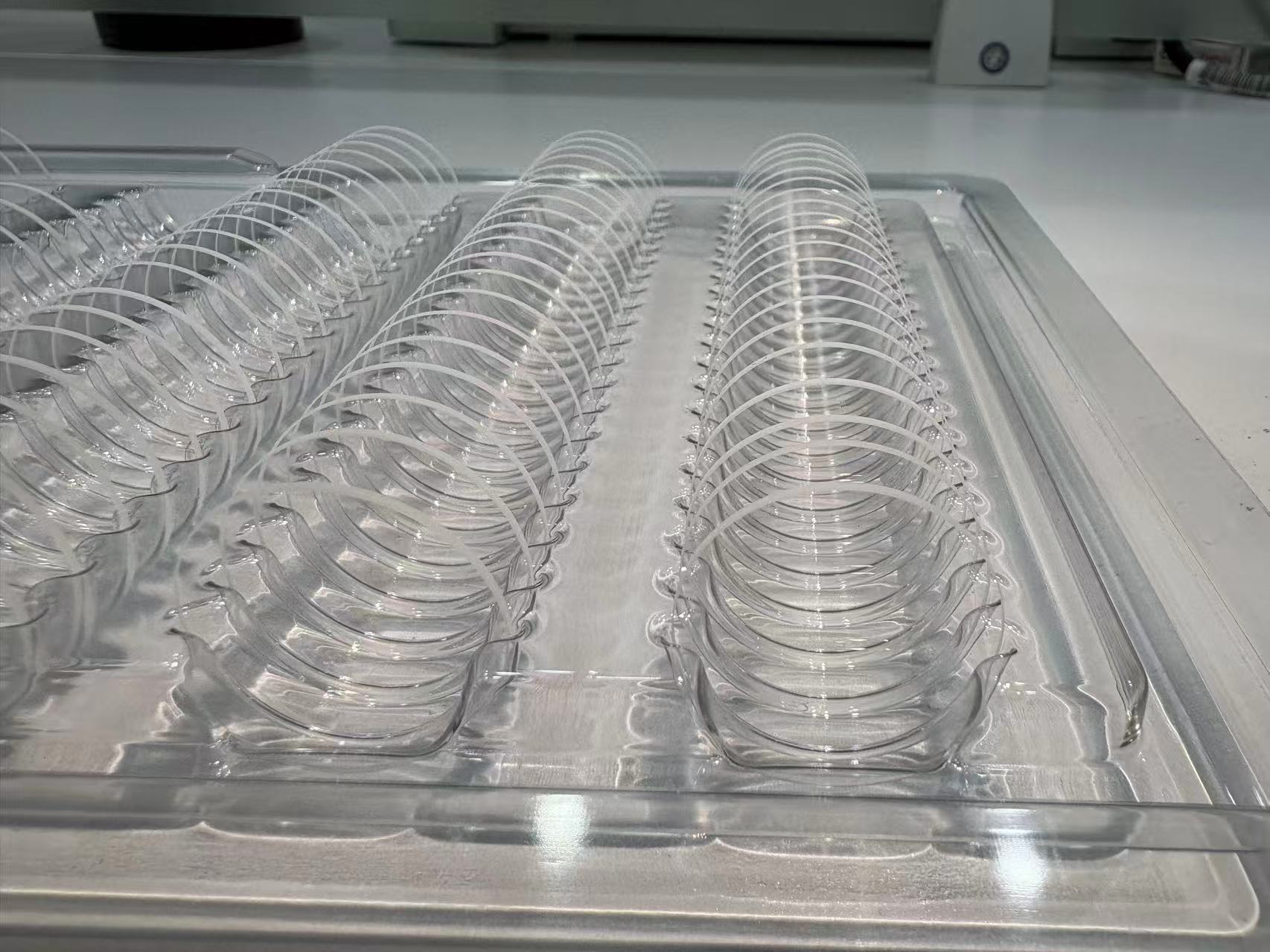
The 193nm window sheet is a high-precision optical component specially designed for the deep ultraviolet (DUV) band. It is mainly used in 193nm ArF excimer laser systems, photolithography equipment, and deep ultraviolet detection instruments. As a protective or transmission window in the optical path, it needs to maintain extremely high transmittance, optical uniformity, and laser damage threshold at the 193nm wavelength. It is a key component in deep ultraviolet lithography, precision measurement, and semiconductor manufacturing fields.
II. Usage Introduction
Core Functions and Application Scenarios
Deep ultraviolet light path transmission: Provides high transmittance at the 193nm wavelength to ensure efficient laser energy transmission, being the core transmission component in photolithography and detection systems.
Environmental isolation and protection: Isolates the external environment (such as dust, moisture), protects the internal optical components from contamination or damage, while maintaining the stability of the optical path.
Laser system adaptation: Used for ArF excimer laser, deep ultraviolet spectrometers, and semiconductor lithography equipment, capable of withstanding high-power ultraviolet laser irradiation.
Usage Precautions
Wavelength matching: Only applicable to the 193nm deep ultraviolet band. Avoid using it at other wavelengths to prevent optical performance degradation or component damage.
Laser damage threshold: Strictly control the incident laser power density, not exceeding the rated damage threshold of the component, to prevent irreversible damage to the film layer or substrate material.
Environmental requirements: Avoid using it in high-temperature, high-humidity, or highly corrosive environments to prevent substrate material aging or the detachment of the anti-reflection film layer.
Installation and alignment: Install the window sheet to be strictly perpendicular to the optical path to avoid introducing wavefront distortion or optical axis deviation; use stress-free fixtures to prevent stress birefringence.
Cleaning and maintenance: Use a lint-free cloth dipped in absolute ethanol or isopropanol to gently wipe the surface. Do not touch directly with your hands or use rough materials to wipe, to avoid scratching or contaminating the optical surface.
III. Manufacturing Instructions
Material Selection
Fused Silica (Fused Silica): High transmittance in the 193nm band, extremely low thermal expansion coefficient, and excellent anti-laser damage performance, making it the preferred material for 193nm window sheets.
Calcium Fluoride (CaF₂): Excellent transmittance in the deep ultraviolet band, good thermal stability, suitable for special scenarios with extremely high transmittance requirements.
Magnesium Fluoride (MgF₂): High ultraviolet transmittance, suitable for preparing anti-reflection film layers to enhance the optical performance of the window sheet in the 193nm band.
Processing Technology
Blank cutting: Use high-precision diamond cutting equipment to cut the raw material into blanks close to the final size, with a size tolerance of ±0.1mm.
Coarse grinding and fine grinding: Through a graded grinding process, gradually process the parallel optical surfaces to ensure surface shape accuracy and surface flatness. After fine grinding, the surface roughness Ra ≤ 0.05μm.
Ultra-precision polishing: Use chemical mechanical polishing (CMP) technology to process the optical surface to an ultra-smooth surface (surface quality in accordance with ISO 10110-7 standards), reducing scattering loss and absorption loss.
Coating treatment: Deposit 193nm-specific anti-reflection films (AR coating) on both sides to enhance the transmittance in the 193nm band and enhance the anti-laser damage performance.
Testing and calibration: Use ultraviolet spectrophotometers, laser interferometers, etc., to test transmittance, surface shape accuracy, wavefront distortion, and anti-laser damage threshold to ensure compliance with technical specifications.
Cleaning and packaging: After cleaning, the finished product is vacuum-packed in an airtight environment to avoid contamination during transportation and storage.
Quality Control
Transmittance indicators: Transmittance in the 193nm band ≥ 99% (double-sided anti-reflection), absorption loss ≤ 0.1%.
Surface shape accuracy: Wavefront distortion ≤ λ/10 (λ = 193nm), ensuring beam quality.
Laser damage threshold: ≥ 20 J/cm² (193nm, 10ns pulse), meeting the requirements of high-power laser systems.
Surface quality: Compliant with ISO 10110 standard, surface scratches ≤ 20/10, no obvious spots or defects.
Recent Articles