Shortwave pass filters are newly available
UltraOpto New Product Launch | Shortpass Filter, a High-Transmittance and Cut-Off Core Optical Component for Precise Spectral Filtering
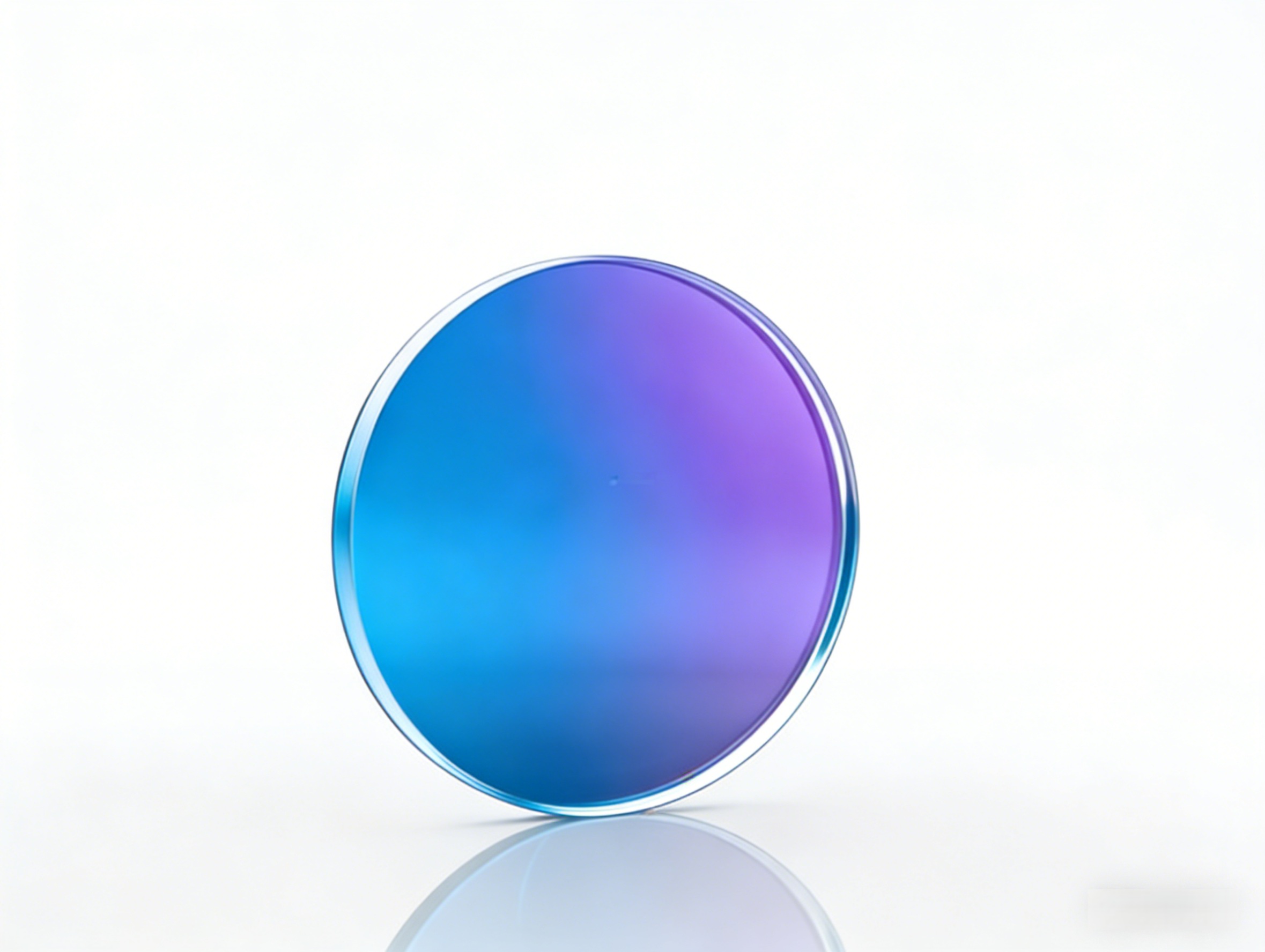
UltraOpto newly launches the Shortpass Filter, a fundamental core component for optical spectral regulation. Based on the principle of multi-layer dielectric film interference, it achieves precise spectral filtering with high transmittance for short wavelengths and deep cut-off for long wavelengths. It features high transmittance, ultra-high cut-off depth, and an extremely steep transition band. It can effectively block long-wavelength interference light, retain short-wavelength effective signals, and significantly improve the signal-to-noise ratio of optical systems. It is an essential optical component in various fields such as spectral analysis, biological detection, machine vision, and laser systems.
The product supports customization of cut-off wavelengths in the full range of 200nm~2000nm. Regular models are made of selected N-BK7/K9 optical glass and B270 float glass. For ultraviolet scenarios, JGS1/UVFS fused silica substrates can be customized. Ultra-thin polymer substrates can also be customized as needed to adapt to curved and compact optical path layouts. The sizes cover circular, square and special-shaped specifications, with thickness adjustable from 0.55mm to 6mm, and ultra-thin models can be within 500 microns, meeting diverse installation requirements. Adopting ion beam sputtering / electron beam evaporation ultra-precision coating technology, it prepares complex film systems with more than 50 layers. The average transmittance of the passband is 85%-95%, the cut-off depth is up to OD4 and above (high-end models can be customized to OD6), and the transition band can drop rapidly within 20nm, maximizing the accuracy of spectral filtering.
Strict control over the processing accuracy of the entire process: the size tolerance is usually ±0.2mm for regular models and ±0.01mm for ultra-thin models; the cut-off wavelength tolerance is ±3%; the effective light-transmitting aperture is >90%; the edges are chamfered to prevent chipping. Temperature and humidity are controlled throughout the coating process to ensure the compactness and adhesion of the film layer, with excellent consistency in mass production. The light-transmitting surface can be paired with an anti-reflection film to improve transmittance, and the edges are coated with a blackening film to suppress stray light. Before leaving the factory, it undergoes comprehensive testing with high-precision equipment such as spectrophotometers and spectrum analyzers, and passes rigorous tests including high and low temperature cycles (-40℃~+85℃), damp heat aging, and film layer adhesion. The optical performance does not drift in temperature-varying and humid environments, and the film layer is scratch-resistant and corrosion-resistant, adapting to long-term continuous industrial-grade working needs.
It is widely used in multiple scenarios such as biomedical detection (fluorescence imaging, flow cytometry analysis), machine vision / industrial inspection (defect detection, product sorting), spectral analysis / optical experiments (Raman spectroscopy, spectroscopic detection), laser / lighting systems (laser protection, stray light suppression), consumer electronics (digital imaging, fingerprint recognition), and ultraviolet light source equipment. Mainstream specifications are available in stock. The cut-off wavelength, substrate, size, and cut-off depth can all be customized non-standard. Small-batch sampling is supported with stable delivery times, providing high-reliability and high-precision spectral filtering solutions for various optical systems.
Recent Articles