New notch filter product launched
UltraOpto's New Product Launch | Notch Filters: The Core of Spectral Regulation for Deep Cutoff of Narrowband Interference Light
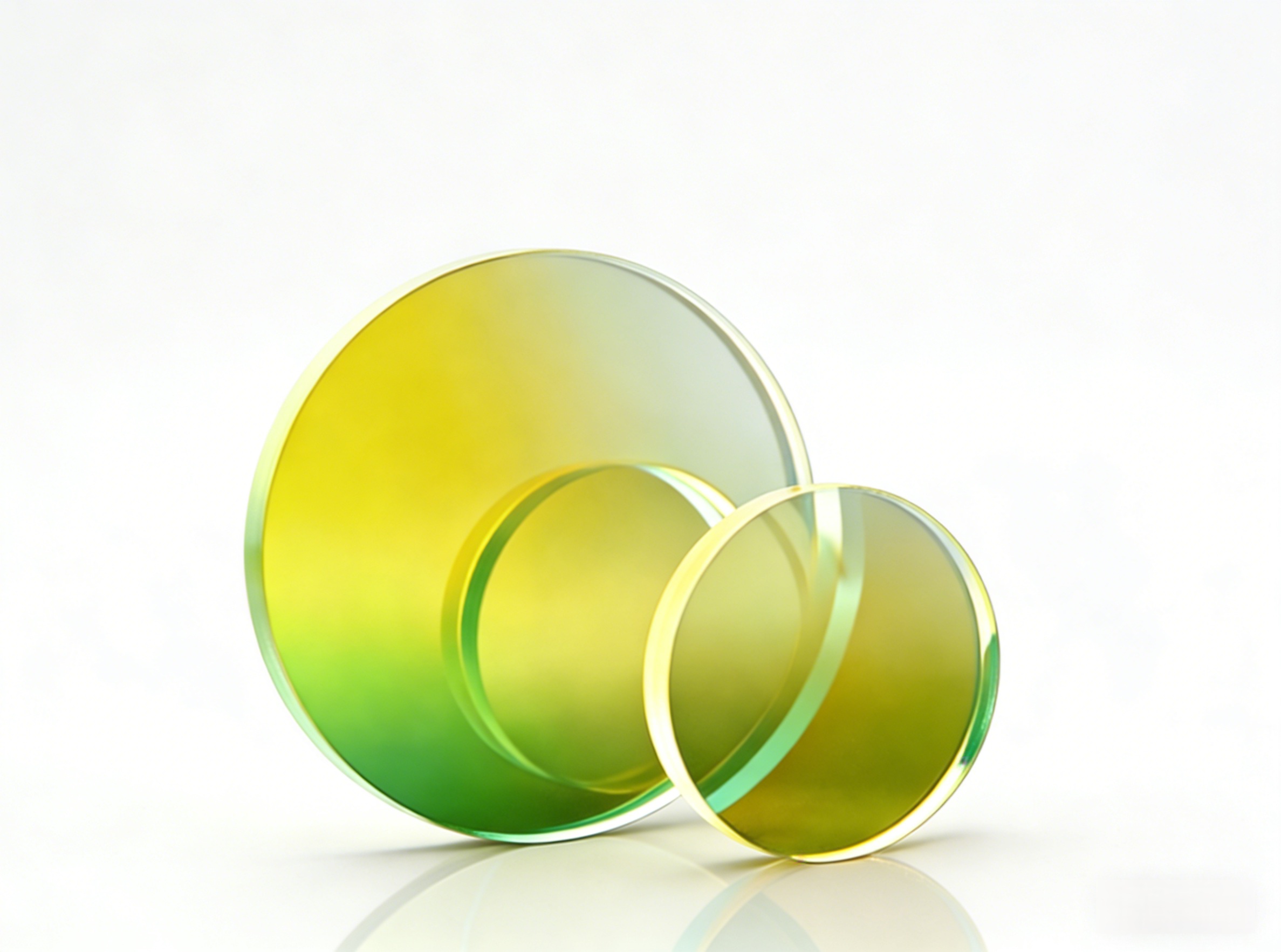
UltraOpto has newly launched notch filters (Notch Filter / Band-stop Filter), which serve as core optical components for high-precision spectral regulation. Relying on the principle of multi-layer dielectric film interference cancellation, they achieve deep cutoff of specific narrowband wavelengths while maintaining high transmission and no loss in other bands. They possess core characteristics such as ultra-high cutoff depth, narrow stopband bandwidth, and high transmission rate in the passband, effectively filtering out target interference light and significantly enhancing the signal-to-noise ratio of optical systems. They are essential components in high-end fields such as Raman spectroscopy, laser fluorescence detection, and biomedical laser systems.
The product supports customization for mainstream laser center wavelengths including 405nm, 488nm, 532nm, 633nm, 785nm, and 1064nm. For the infrared band, the stopband center wavelength can be tuned within 9μm to 11μm. The peak optical density of the stopband can reach OD6 or higher, with a half-width controlled within 13nm to 41nm. The center wavelength tolerance is ±2nm, ensuring precise spectral selection. The average transmission rate in the passband is over 90%, and the performance remains stable within an incident angle of 0±3°, without spectral shift or stray light interference.
The substrate can be selected as needed. For visible light and near-infrared, fused silica (low autofluorescence, high laser damage threshold) is preferred. For general applications, N-BK7/H-K9L optical glass can be chosen. For the infrared band, ZnSe/Ge special substrates can be customized. The product adopts ion beam sputtering / electron beam evaporation + ion-assisted deposition ultra-precision coating technology to prepare alternating high and low refractive index multi-layer dielectric film systems. The film layers are dense and have strong adhesion. The back surface is coated with an anti-reflection film to enhance transmission, and the edges are coated with a blackening film to suppress scattered light. For infrared models, a grating structure can be customized to achieve polarization independence.
High-precision processing standards are strictly controlled. The standard size is Φ25mm, and custom shapes and Φ1-inch specifications are available. The thickness is adapted to different wavelength requirements. The surface quality meets the 60/40 MIL standard, with an effective aperture greater than 85% and a wavefront error of less than λ/2@633nm. The products undergo full-dimensional testing with a spectrophotometer and Fourier transform infrared spectrometer before leaving the factory. They pass rigorous tests including high and low temperature cycling (-40°C to +85°C), damp heat aging, and film adhesion. The optical performance remains stable under temperature changes and vibrations, and the film is scratch-resistant and corrosion-resistant, suitable for long-term continuous operation in industrial and scientific research environments.
They are widely applied in high-end scenarios such as Raman spectroscopy analysis (suppressing Rayleigh scattering light), laser fluorescence instruments (filtering out excitation light), biomedical laser systems (laser surgery / in vivo detection), infrared thermal imaging / gas sensing, lidar, and spectrometers. Mainstream laser wavelength specifications are in stock, and the center wavelength, substrate, and structure can be customized. Small batch samples are supported, with stable delivery times, providing reliable narrowband interference light filtering solutions for various high-end optical systems.
Recent Articles