New Arrival: Ultra-Low Expansion Glass Ultra-Stable Ring Resonator
New Product Launch | UltraOpto ULE Ultra-Low Expansion Glass Ultra-Stable Ring Resonator: A New Benchmark for Frequency Standards in Cutting-Edge Research
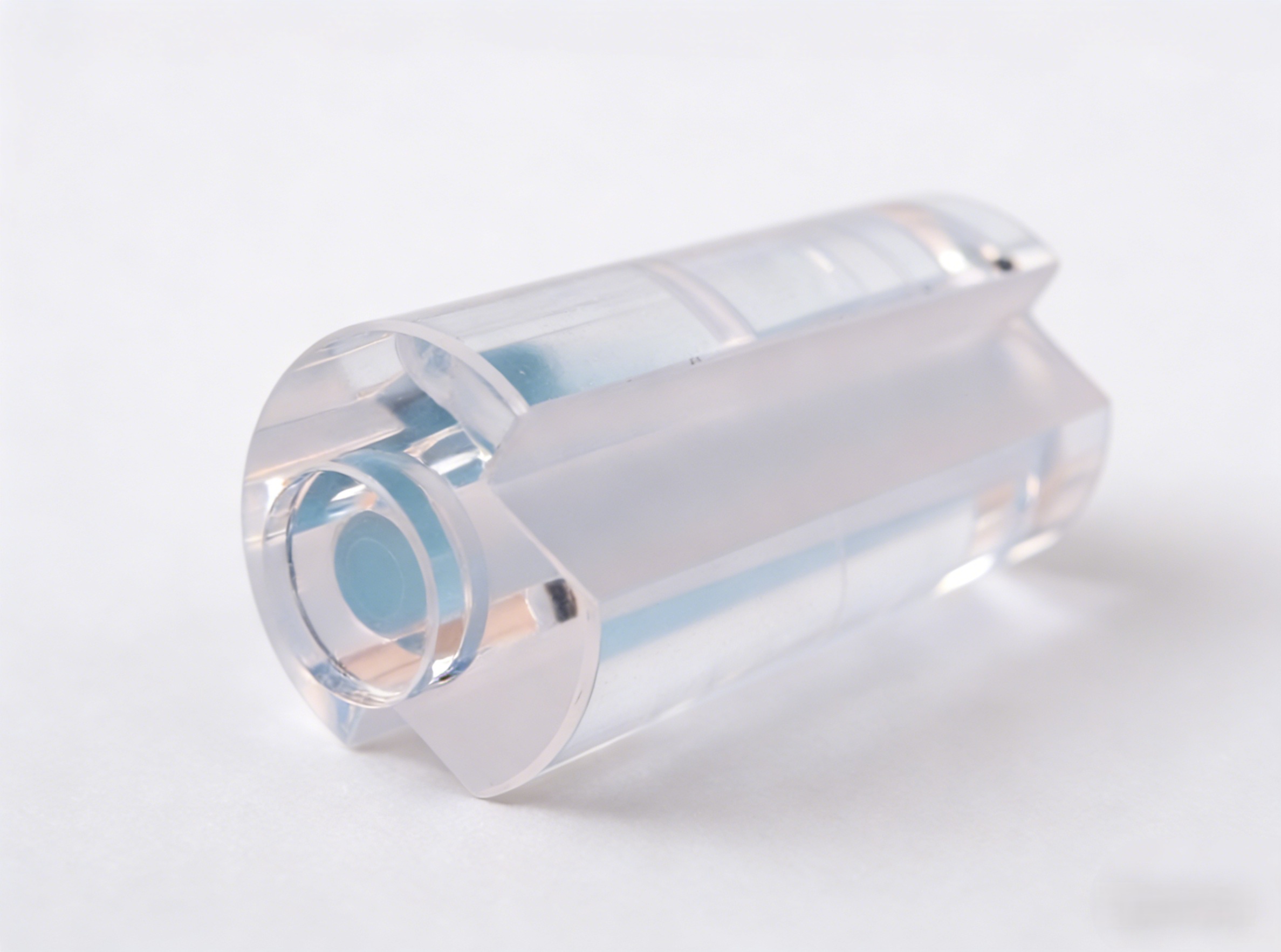
Focusing on the demanding requirements of cutting-edge fields such as ultra-stable lasers, quantum technology, and gravitational wave detection, UltraOpto has launched the ULE Ultra-Low Expansion Glass Ultra-Stable Ring Resonator. This product features high-purity ULE ultra-low expansion glass as its core material, integrating ultra-precision processing, ultra-high vacuum packaging, and nanometer-level temperature control technology. It breaks through the stability bottleneck of traditional resonators, creating an advanced optical core component with sub-hertz frequency stability and near-zero thermal drift, providing an ultimate and reliable frequency standard solution for cutting-edge research and high-end engineering.
Core Hardcore Advantages, Defining a New Height of Stability
Near-zero thermal expansion, eliminating temperature-induced drift: The core is made of high-purity ULE ultra-low expansion glass, with a thermal expansion coefficient as low as 10⁻⁸/K at room temperature. It has a dedicated zero-temperature-drift point, where the thermal expansion coefficient approaches zero near this temperature. Combined with precise temperature control technology, it completely suppresses the influence of temperature fluctuations on cavity length, achieving a long-term frequency drift of less than 5 kHz per day, laying a core foundation for frequency stability.
The YHz-level stability and ultra-low optical loss: the surface form accuracy is ≤λ/20@633nm, the surface roughness RMS is less than 0.1nm, with 99.999% ultra-high reflection multi-layer dielectric coating, the total optical loss is less than 10ppm, and the cavity fineness can reach up to 600,000 at most; under 1s integration time, the frequency stability is optimal up to less than 1.3×10⁻¹⁶, narrowing the laser linewidth to the sub-hertz level, meeting the requirements of low-loss resonance and precise measurement.
Ultra-high vacuum compatibility, all-weather resistance: standard vacuum degree ≤ 10⁻⁶Pa, custom-made models can reach 10⁻⁸Pa. After high-temperature baking and ion pump degassing treatment, there is no residual gas refraction interference. It can withstand a wide temperature range from -40°C to 85°C, has excellent resistance to mechanical vibration, with relative acceleration sensitivity < 10⁻¹²/(m/s²). It is suitable for various extreme working conditions such as laboratories, aerospace vacuum, and field detection, and can operate stably without additional protection.
Integrated and ready-to-use out of the box: It adopts an integrated design of "cavity + vacuum chamber + temperature control module + shock-absorbing base", and the entire process of ultra-precision stress-free assembly is completed in an ISO5-level clean workshop, with coaxiality and positioning accuracy reaching the nanometer level. It can be transported over long distances without the need for realignment of the optical path and can be put into use immediately upon opening the box, significantly simplifying the research and engineering deployment process.
All-round customization to meet diverse demands: Supports full-dimensional customization including cavity length (conventional 50mm/100mm/300mm), vacuum degree, temperature control accuracy, and coating band, capable of matching the personalized needs of different scenarios such as ultra-stable lasers, quantum experiments, and optical frequency standards, while balancing performance and adaptability.
Frontier application scenarios, empowering scientific research breakthroughs
As a core reference component of modern precision optics and quantum technology, it is widely applied in cutting-edge fields such as ultra-stable lasers, optical frequency combs, quantum computing and communication, cold atom/ion trap experiments, optical frequency standards, gravitational wave detection, spaceborne laser ranging, and high-precision laser interferometry. It provides ultra-high-precision frequency and cavity length references for fundamental physics research and high-end engineering applications, assisting researchers in breaking through technical bottlenecks and promoting technological innovation in related fields.
Relying on the ultimate stability of ULE glass and ultra-precise manufacturing processes, this product features excellent chemical stability and no performance degradation. The coating layer has passed rigorous tests without peeling off. The long-term continuous operation failure rate is less than 0.1%. With high reliability, it has become the core choice for cutting-edge research and high-end engineering.
Recent Articles